How to Scale a Small Business: Proven Strategies to Grow Sales and Profit

Sooner or later, every small business owner hits a ceiling: they are working at full capacity, orders are no longer increasing, and profit grows more slowly than costs. Scaling isn't simply “selling more” — it means building a system that grows without a proportional increase in costs or the owner's personal involvement. Here are proven strategies that help increase both sales and profit.
Signs Your Business Is Ready to Scale
- Your product sells consistently, and customers come back and recommend you.
- Your unit economics are positive: every sale is profitable after all variable costs.
- Key processes are documented and can run without the owner.
- You have a financial cushion covering at least three months of operating expenses.
If even one of these is missing, strengthen the foundation first. Scaling an unprofitable model only speeds up the losses.
Strategy 1. Get Your Unit Economics in Order
Calculate how much it costs to acquire one customer (CAC) and how much that customer brings in over the entire relationship (LTV). An LTV-to-CAC ratio of 3:1 or higher is considered healthy. Analyse the margin of each product: often 20% of your range generates 80% of profit, while the rest simply consumes resources.
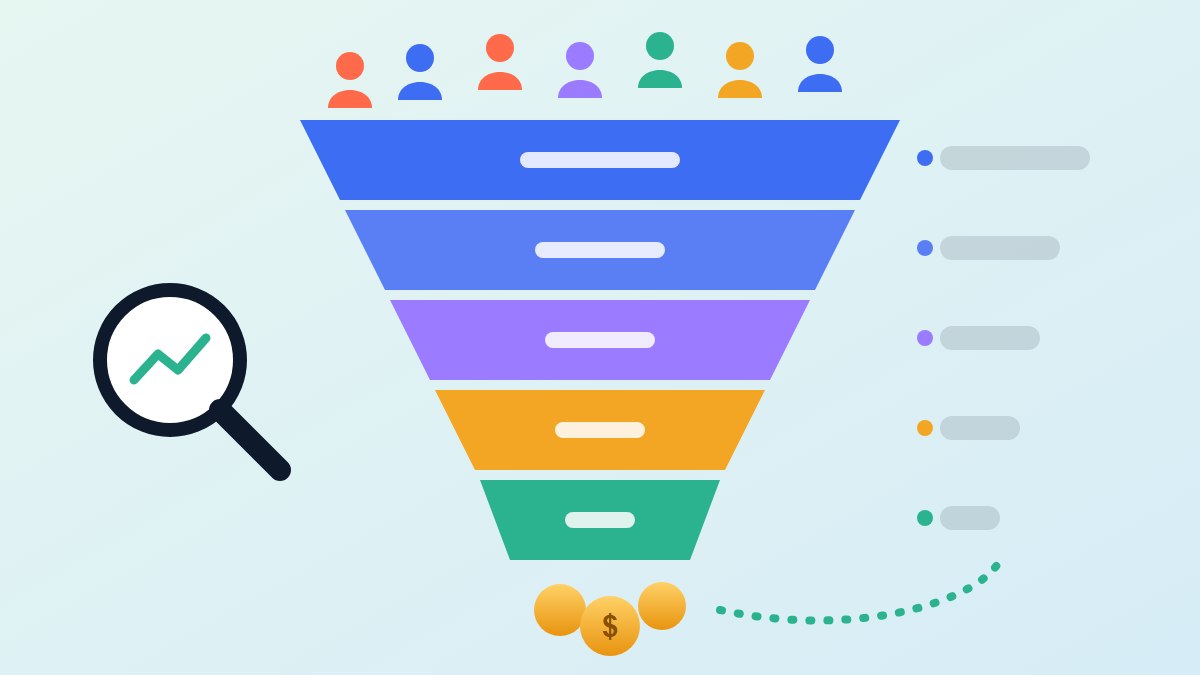
Strategy 2. Build a Manageable Sales Funnel
Break the customer journey into stages: first contact, enquiry, consultation, payment and repeat purchase. Measure conversion at every step. Improving conversion by just a few percentage points at each stage leads to multiplied revenue growth without increasing your ad budget.
Strategy 3. Increase Average Order Value and Purchase Frequency
- Upselling and cross-selling: offer complementary products and extended packages.
- Bundles: combine services into attractive packages.
- Loyalty programmes: bonuses and personalised offers for regular customers.
- A subscription model: turns one-off sales into recurring revenue.
Retaining an existing customer is usually several times cheaper than acquiring a new one, so working with your customer base is the fastest source of growth.
Strategy 4. Automate Routine Work
A CRM system, online booking, automatic reminders, electronic document management, payment integrations and AI assistants for handling standard requests free up dozens of hours a month. The owner can then invest that time in strategy and development.
Strategy 5. Delegate and Build a Team
Document processes as step-by-step instructions and checklists. Start by delegating repetitive tasks, then hand over entire areas of the business. Hire against specific performance metrics and hold short regular stand-ups to stay in control without micromanaging.
Strategy 6. Open New Channels and Markets
- Expanding onto marketplaces and new social networks.
- Partnering with companies that share your audience but sell a different product.
- Geographic expansion: delivery to other cities or an online version of your services.
- Franchising or licensing, if the model is well packaged and easy to replicate.
Key Metrics for Tracking Growth
| Metric | What it shows | How to improve it |
|---|---|---|
| CAC | Cost of acquiring a customer | Ad optimisation, referrals, content |
| LTV | Revenue from a customer over time | Retention, repeat sales, subscriptions |
| Conversion rate | Share of visitors who become customers | Better offers, faster responses, reviews |
| Average order value | Amount of a single purchase | Upsells, bundles, premium versions |
| Net margin | Share of profit in revenue | Cost control, pricing review |
Scaling Mistakes to Avoid
- Costs growing faster than revenue: new staff and offices before demand is proven.
- Declining product and service quality as volumes increase.
- No financial planning, leading to cash-flow gaps.
- Trying to launch every strategy at once instead of taking consistent steps.
Practical tip: choose one main growth strategy per quarter and 2–3 metrics to measure it by. Focus delivers more than dozens of simultaneous initiatives.
Conclusion
Scaling a small business is a step-by-step process: first profitable unit economics and a manageable funnel, then automation, a team and new channels. Move one step at a time, measure your results and invest in what has already proven effective. That is how small companies grow into stable, profitable brands.